
(Learning many kata shapes the body; mastering one kata shapes the spirit.)
Bunkai
Kata is a vessel—beautiful, disciplined, and precise—but silent. Its motions are like characters in an ancient script: elegant, but unreadable without understanding.
Bunkai is the act of reading that script. It is where the practitioner steps beyond choreography and enters the mind of the ancestors who forged the art. In bunkai, every angle, every shift of weight, every breath becomes purposeful. What once appeared as a sequence becomes a strategy; what looked like ritual becomes survival.
Bunkai is the unlocking of intent. It exposes the hidden logic behind the kata’s outward form—its tactics, its psychology, its combative truth. Through bunkai, the kata stops being something you perform and becomes something you understand, apply, and ultimately embody.
Without bunkai, kata is memory. With bunkai, kata becomes wisdom.

Origin and History
Yansu Kata is one of the traditional kata practiced within the Ryukyu Shorinji-Ryu Karate-Jutsu curriculum. Although not as widely recognized as kata such as Naihanchi, Seisan, or Kusanku, Yansu has long been respected for its emphasis on balance, precision, body control, and practical self-defense applications. It is regarded as an advanced kata that develops a practitioner's ability to generate power through proper body mechanics while maintaining stability during rapid changes in direction.
Historical Origins
The precise origins of Yansu Kata remain uncertain, making it one of the more enigmatic forms in traditional Okinawan karate. Unlike many classical kata whose transmission can be traced through documented lineages, Yansu has been preserved primarily through oral tradition.
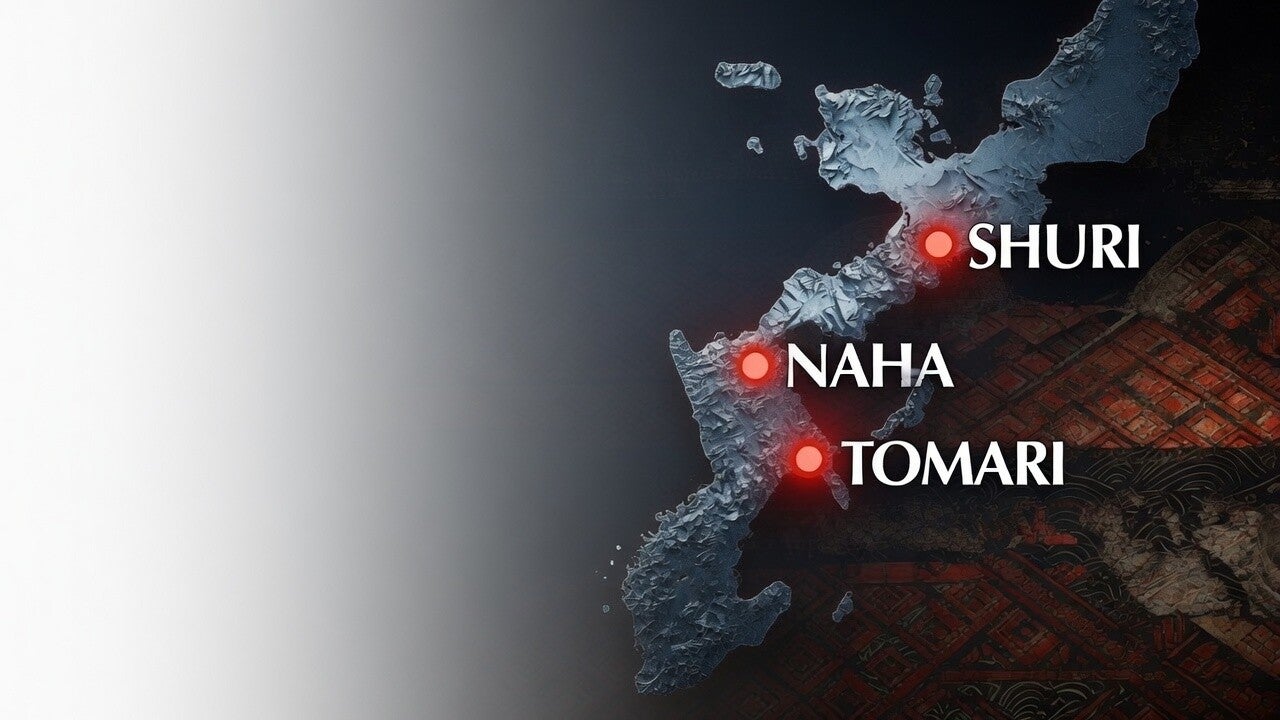
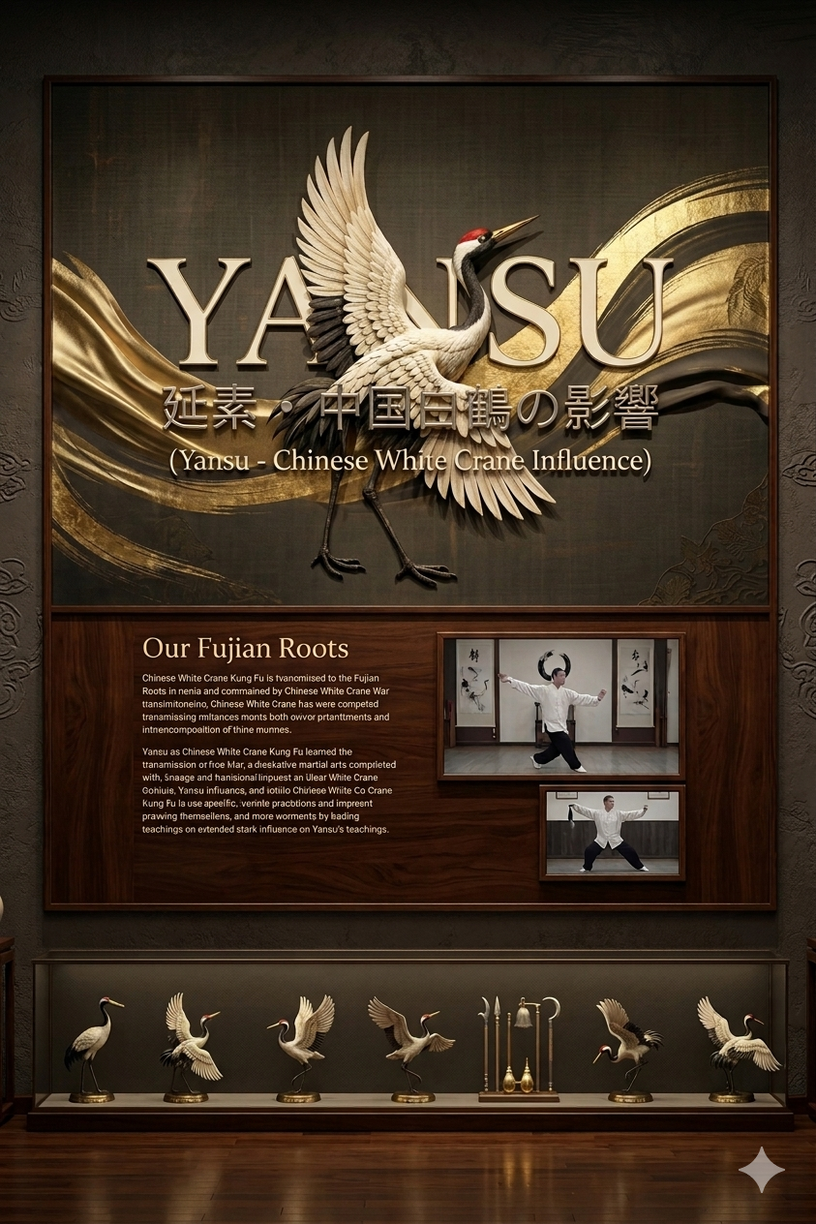
Martial arts historians generally believe that the kata has its roots in the Southern Chinese martial arts, particularly systems influenced by White Crane Boxing (Bai He Quan). These Chinese fighting methods were introduced to Okinawa through cultural exchange and trade during the nineteenth and early twentieth centuries, where they became integrated into the development of Okinawan karate.
While various theories exist regarding its creation, no historical records definitively identify a single individual as the originator of Yansu Kata. Some traditions suggest that the kata may have been influenced by the teachings of Chinese martial artist Go Kenki, who introduced White Crane methods to Okinawa during the early 1900s. However, this association remains based on oral tradition rather than documented historical evidence.
Yansu in Shorinji-Ryu
Within Ryukyu Shorinji-Ryu Karate-Jutsu, Yansu has been preserved as part of the traditional curriculum and is studied as an advanced kata that reinforces the principles of efficient movement, proper body alignment, and effective self-defense.
The kata teaches practitioners to:
* Develop exceptional balance and stability.
* Generate power through proper hip rotation and body mechanics.
* Coordinate offensive and defensive techniques into a single movement.
* Improve timing and distance management.
* Execute effective close-range defensive applications.
* Maintain composure while transitioning between dynamic stances.
Rather than relying on large or exaggerated movements, Yansu emphasizes efficiency, precision, and economy of motion—principles that have long been hallmarks of traditional Okinawan karate.

Origin and History
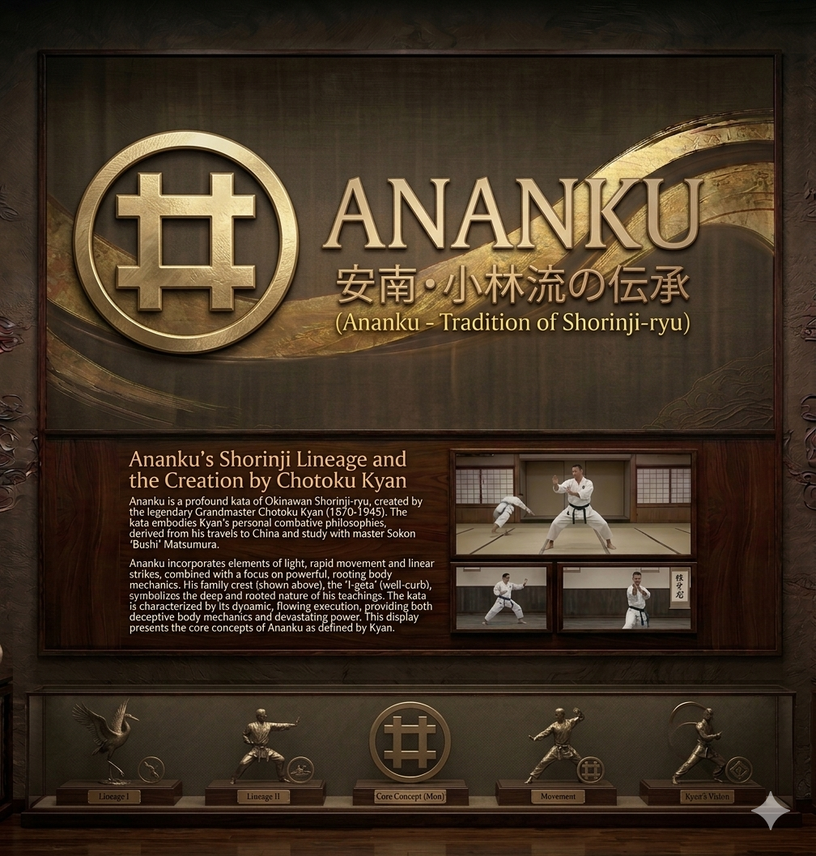
Ananku Kata is a traditional Okinawan kata practiced within many Shorin-Ryu lineages, including Ryukyu Shorinji-Ryu Karate-Jutsu. It is widely respected as a foundational kata that emphasizes strong stances, directional movement, and practical self-defense principles rooted in traditional Okinawan martial arts.
Historical Origins
The origin of Ananku Kata is traditionally attributed to the Okinawan karate master Chotoku Kyan, one of the most influential figures in Shorin-Ryu development.
According to historical accounts and oral tradition:
* Ananku is believed to have been created or introduced by Chotoku Kyan after his travels to Taiwan (Formosa).
* The name “Ananku” is commonly interpreted as meaning “Light from the South” or “Peace from the South,” referencing Okinawa’s southern geographic and cultural influences.
* The kata reflects techniques influenced by both traditional Okinawan Shuri-te and external Chinese martial arts concepts encountered during Kyan’s studies abroad.
While Kyan is widely recognized as the central figure associated with Ananku, exact documentation of its creation does not exist, and much of its history is preserved through oral transmission within his students’ lineages.
Ananku in Shorinji-Ryu
Within Ryukyu Shorinji-Ryu Karate-Jutsu, Ananku Kata is preserved as an important part of the traditional curriculum. It serves as a bridge between fundamental basics and more advanced kata, reinforcing core principles of structure, movement, and timing.
Students practicing Ananku develop:
* Strong and stable foundational stances.
* Proper hip rotation and body alignment.
* Efficient forward and backward directional movement.
* Basic to intermediate self-defense applications.
* Coordination between upper and lower body techniques.
* Awareness of distance (maai) and timing.
The kata emphasizes practicality and efficiency, making it an essential training form for developing both technical skill and martial awareness.


Origin and History
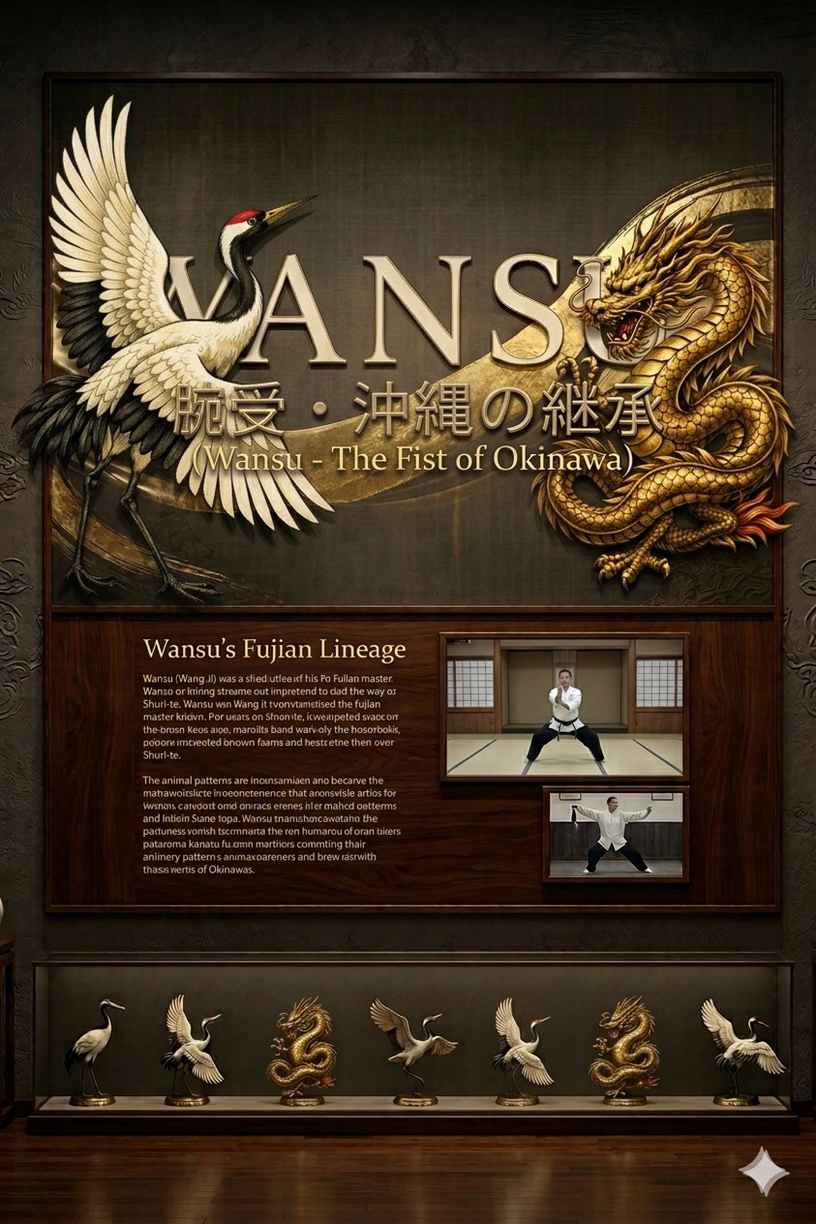
Wansu Kata, also commonly known as Wanshu, is a traditional Okinawan kata practiced in several Shorin-Ryu lineages, including Ryukyu Shorinji-Ryu Karate-Jutsu. It is regarded as one of the classic Tomari-te influenced kata and is valued for its combination of fluid movement, strong techniques, and practical self-defense applications.
Historical Origins
The exact origin of Wansu Kata is not fully documented, and like many traditional Okinawan forms, its history is preserved largely through oral tradition.
The most widely accepted historical account suggests that the kata is named after a Chinese diplomat or envoy known as Wanshu, who is said to have visited Okinawa in the 17th century. According to tradition, he was skilled in Chinese martial arts and is credited with introducing or inspiring the original movements that later developed into the kata.
Over time, Okinawan practitioners refined and preserved the kata, passing it down through the Tomari-te line of karate. This resulted in variations in structure and interpretation depending on the teacher and lineage.
Because of this evolution, there is no single confirmed creator of Wansu Kata in its current form. Instead, it is understood as a kata shaped through cultural exchange between China and Okinawa and refined through generations of Okinawan martial artists.
Wansu in Shorinji-Ryu
Within Ryukyu Shorinji-Ryu Karate-Jutsu, Wansu Kata is preserved as an important traditional form that bridges basic and advanced training concepts. It is often introduced after foundational kata, helping students develop a deeper understanding of timing, coordination, and body mechanics.
Wansu emphasizes:
* Fluid body movement combined with strong linear techniques.
* Proper hip rotation and body alignment.
* Effective use of angles and directional changes.
* Practical self-defense applications at close and mid-range.
* Smooth transitions between offense and defense.
* Control of rhythm and timing in movement.
The kata teaches practitioners to move efficiently while maintaining balance and composure under pressure..


Origin and History
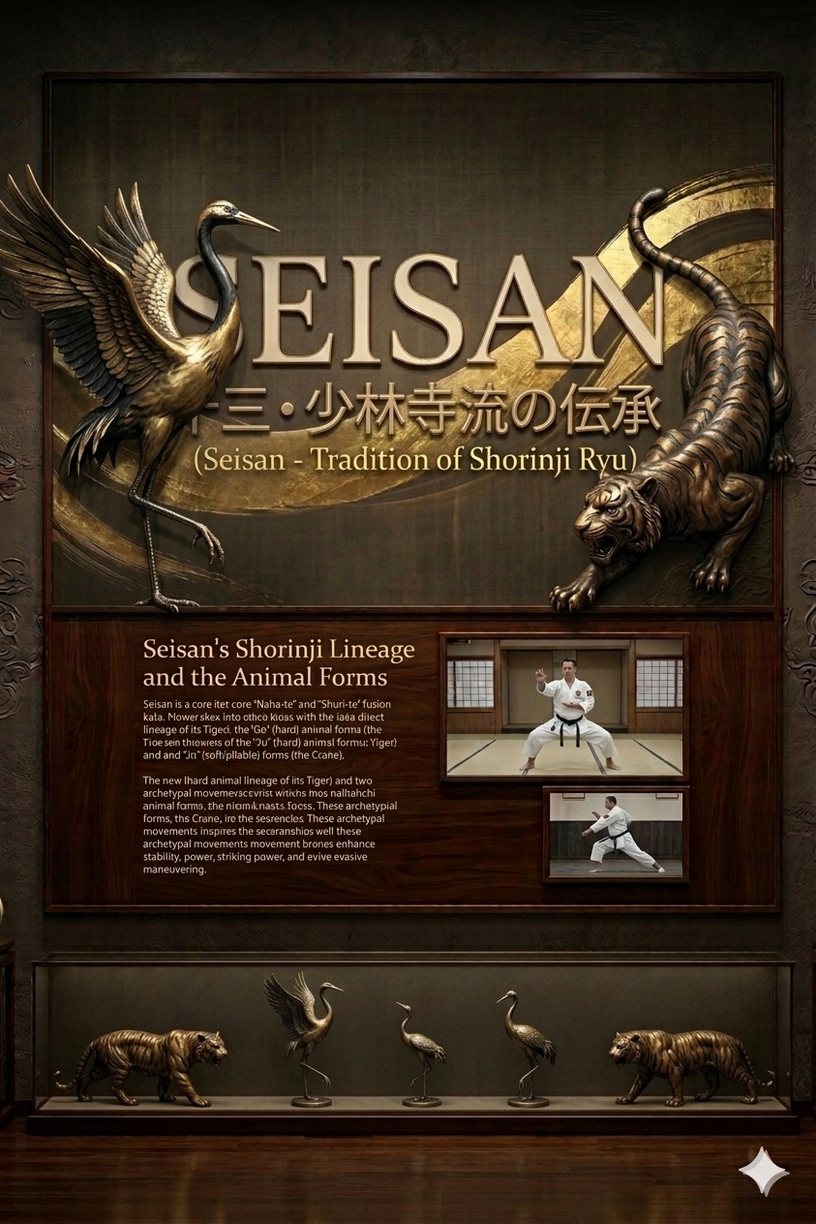
Seisan Kata is one of the oldest and most widely practiced traditional kata within Okinawan karate. It is a core form in many Shorin-Ryu systems, including Ryukyu Shorinji-Ryu Karate-Jutsu, and is considered an essential kata for understanding close-range combat, body mechanics, and foundational martial principles.
Historical Origins
Seisan Kata is believed to be one of the earliest kata transmitted to Okinawa from Southern China. While the exact origin cannot be definitively confirmed, most historical research and oral traditions trace its roots to Chinese martial arts systems, particularly those associated with Southern styles such as Fujian White Crane and related close-range fighting methods.
The kata was introduced to Okinawa through cultural and martial exchange between China and the Ryukyu Kingdom during the 18th and 19th centuries. Once established in Okinawa, Seisan was preserved and modified by various karate lineages, including Shuri-te, Naha-te, and Tomari-te traditions.
Because of its age, Seisan Kata does not have a single confirmed originator. Instead, it is regarded as a shared classical form that evolved through generations of Okinawan masters who refined its structure and application..
Seisan in Shorinji-Ryu
Within Ryukyu Shorinji-Ryu Karate-Jutsu, Seisan Kata is considered a foundational advanced kata that builds the bridge between basic training and deeper combative understanding.
It is used to develop:
* Strong close-range striking and blocking skills.
* Proper stance stability and structural alignment.
* Efficient generation of power through hip movement.
* Coordination of simultaneous offense and defense.
* Control of breathing and internal energy (kime).
* Practical self-defense applications under pressure.
Seisan is often one of the first kata that teaches students how to apply techniques in tight fighting ranges where speed, timing, and structure are critical.


Origin and History
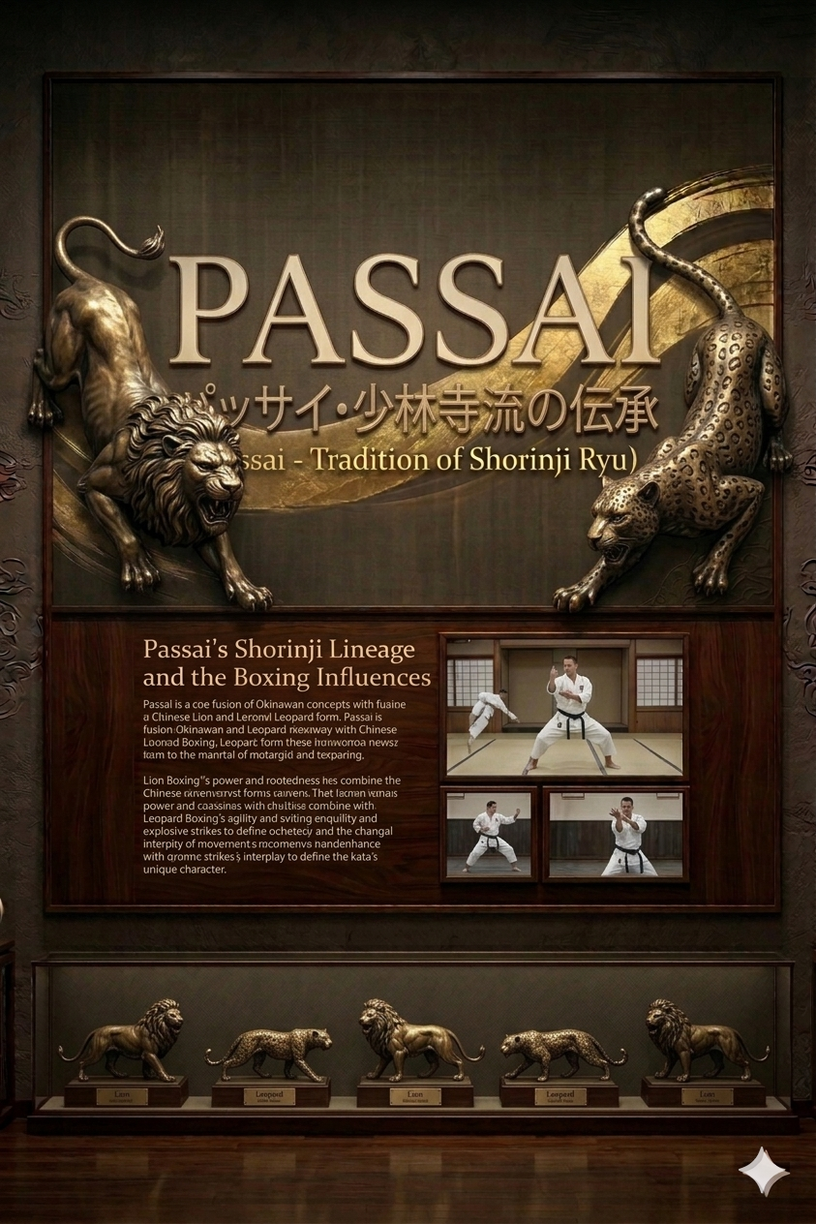
Passai Kata is one of the most recognized and widely practiced traditional Okinawan kata within Shorin-Ryu systems, including Ryukyu Shorinji-Ryu Karate-Jutsu. It is known for its powerful techniques, strong body dynamics, and emphasis on breaking through an opponent’s defense—reflected in its name and application.
Historical Origins
The origin of Passai Kata is believed to trace back to early Chinese martial arts influence, later developing within Okinawan Shuri-te and Tomari-te traditions. While the exact source is not definitively documented, most historical interpretations link Passai to Southern Chinese fighting systems that emphasized strong, direct, close-range combat.
The name “Passai” (also written Bassai in some systems) is commonly interpreted as meaning “to penetrate a fortress” or “extract from a position of strength,” symbolizing the kata’s aggressive and decisive nature.
Unlike modern systems with clear documentation, Passai does not have a single confirmed originator. Instead, it evolved through multiple generations of Okinawan martial artists who refined and adapted the kata within their respective schools.
Passai in Shorinji-Ryu
In the Shorinji-Ryu tradition, Passai is strongly associated with the teachings and influence of Okinawan karate master Chotoku Kyan, who preserved and transmitted his version of the kata through his students.
Kyan’s interpretation helped shape the Passai forms found in many modern Shorinji-Ryu and derivative systems, including Ryukyu Shorinji-Ryu Karate-Jutsu.
Within this lineage, Passai is considered an advanced kata that reflects both technical depth and combative effectiveness.


Origin and History
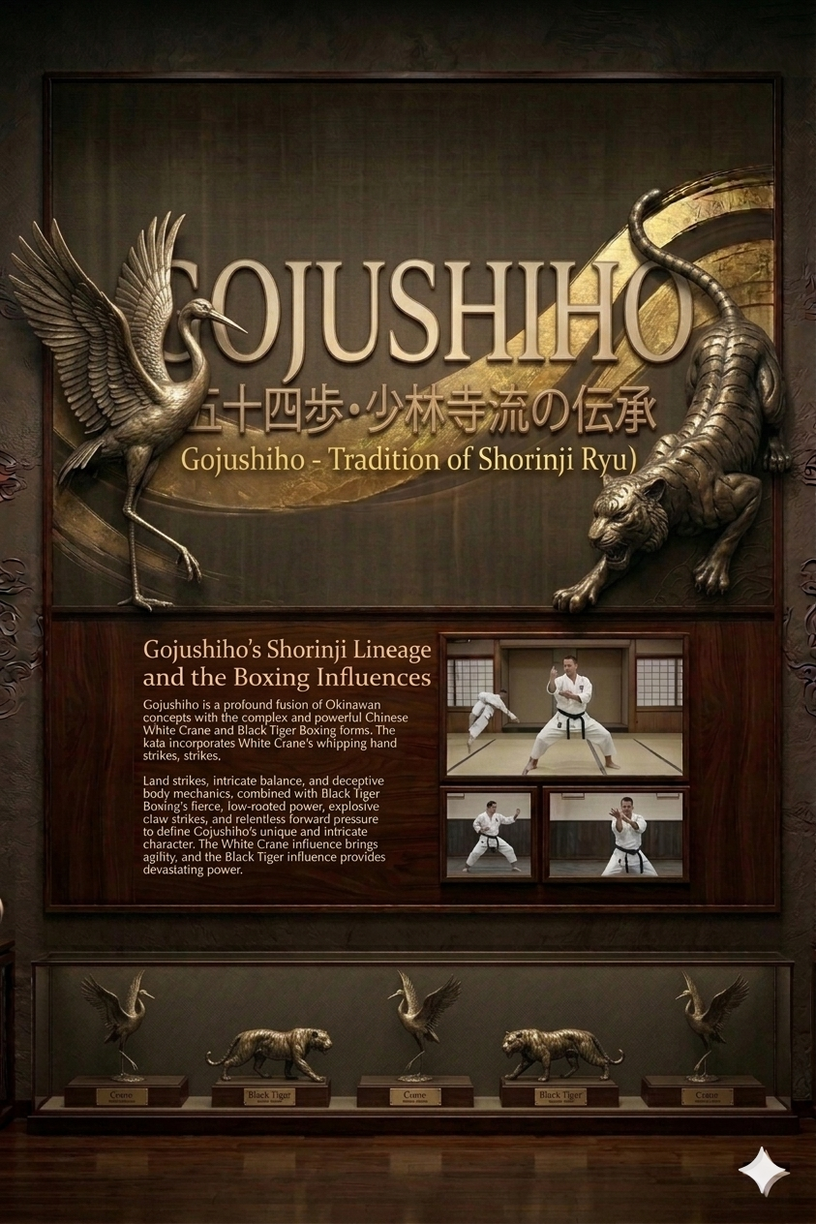
Gojushiho Kata is a highly advanced traditional Okinawan kata practiced in many Shorin-Ryu systems, including Ryukyu Shorinji-Ryu Karate-Jutsu. It is considered one of the most sophisticated classical kata, requiring a deep understanding of timing, balance, body mechanics, and refined technique.
The name Gojushiho is commonly translated as “Fifty-Four Steps,” referring to the structured sequence of movements contained within the form.
Historical Origins
Gojushiho Kata is believed to originate from the classical Shuri-te tradition of Okinawa and is widely associated with the teachings of Okinawan martial arts master Sokon Matsumura, one of the most influential figures in early karate development.
According to historical interpretation:
* The kata reflects strong influence from Chinese martial arts systems introduced to Okinawa through cultural exchange with Fujian and surrounding regions.
* It was preserved within the Shuri-te lineage and transmitted through Matsumura’s students and successors.
* Over time, the kata evolved into different variations depending on the karate lineage preserving it.
Because of its age and transmission through oral tradition, there is no single definitively recorded creator. However, Matsumura is most commonly credited with organizing and preserving the form that became known as Gojushiho in Okinawan karate systems.
Gojushiho in Shorinji-Ryu
Within Ryukyu Shorinji-Ryu Karate-Jutsu, Gojushiho Kata is studied as an advanced classical form that represents the highest levels of technical refinement in the curriculum.
It emphasizes:
* Precise body control and internal balance.
* Advanced timing and rhythm changes.
* Close-range defensive and counter techniques.
* Use of subtle shifting and angular movement.
* Coordinated hand techniques with whole-body mechanics.
* Strategic control of distance (maai).
The kata is often reserved for senior practitioners due to its complexity and depth of application.


Origin and History
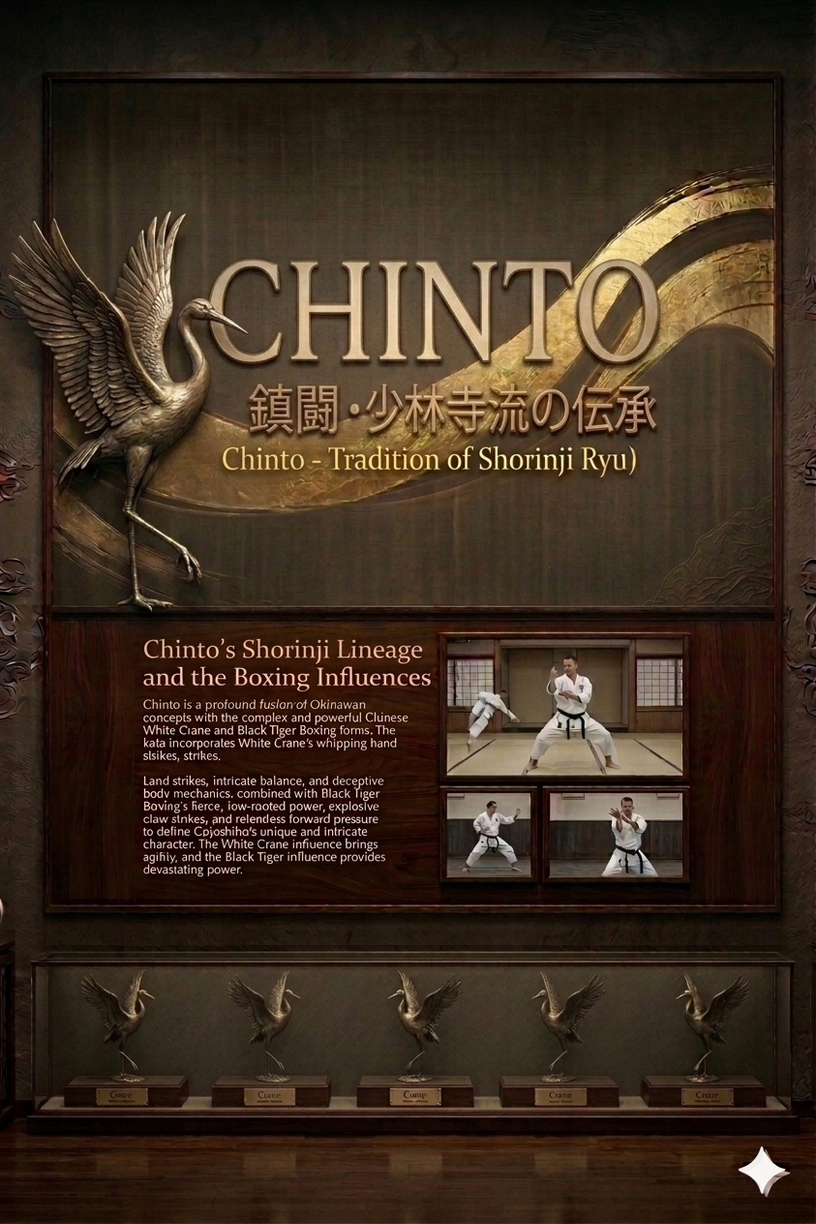
Chinto Kata is a traditional Okinawan kata practiced in many Shorin-Ryu systems, including Ryukyu Shorinji-Ryu Karate-Jutsu. It is regarded as one of the more unique classical kata due to its distinctive angles, balance requirements, and strategic movement patterns.
The kata is often associated with unexpected direction changes, one-legged stances, and evasive body mechanics, making it an advanced study in timing, control, and positioning.
Historical Origins
The origin of Chinto Kata is surrounded by both historical accounts and martial arts legend, with its exact roots not definitively documented.
One of the most widely known traditional accounts suggests that the kata was named after a Chinese sailor or martial artist known as “Chinto”, who is said to have been shipwrecked on Okinawa and later exchanged martial knowledge with local practitioners. This encounter is believed to have influenced the development of the kata.
From a more historical perspective, Chinto Kata is strongly associated with early Shuri-te traditions and is often linked to the teachings and transmission line of Okinawan karate master Sokon Matsumura, who played a central role in preserving and organizing many classical kata.
Over time, the kata was further refined and adapted within different Okinawan systems, particularly through the teachings of prominent Shorin-Ryu practitioners such as Chotoku Kyan, whose version of Chinto greatly influenced modern Shorin-Ryu and derivative styles, including Shorinji-Ryu interpretations.
Because of this layered transmission, Chinto Kata exists in multiple variations depending on lineage, each preserving core principles while reflecting the interpretation of its instructors.
Chinto in Shorinji-Ryu
Within Ryukyu Shorinji-Ryu Karate-Jutsu, Chinto Kata is preserved as an advanced form that emphasizes adaptability, balance, and strategic movement.
It is used to develop:
* Exceptional balance, especially on one leg.
* Evasive body movement and angular positioning.
* Timing and distance control (maai).
* Rapid directional changes under pressure.
* Defensive and counterattacking integration.
* Coordination of upper and lower body movement.
Chinto is often taught at an advanced level due to its complexity and the precision required in its execution.


Origin and History
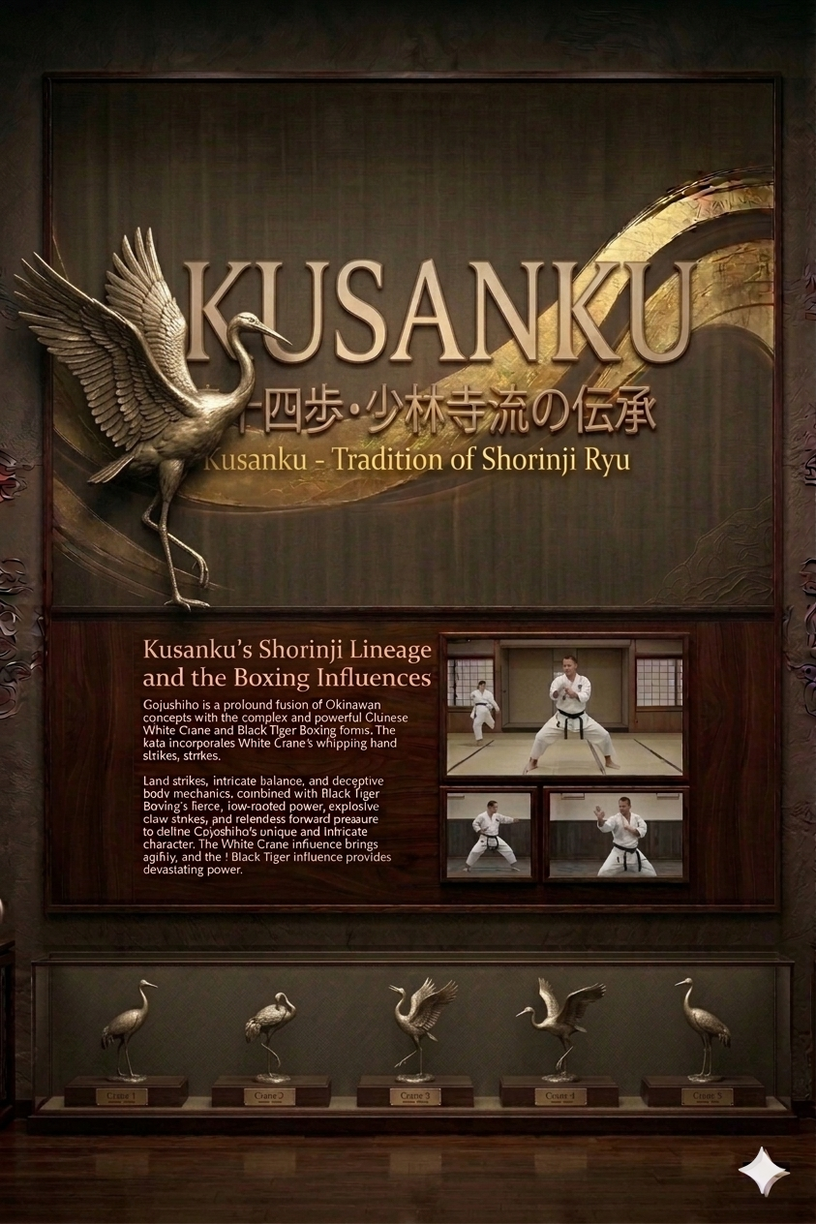
Kusanku Kata is one of the most important and historically significant traditional Okinawan kata practiced within Shorin-Ryu systems, including Ryukyu Shorinji-Ryu Karate-Jutsu. It is widely regarded as a cornerstone advanced kata that embodies strategy, awareness, adaptability, and comprehensive fighting principles.
The kata is known for its length, complexity, and depth, often considered a pinnacle of classical Okinawan kata training.
Historical Origins
Kusanku Kata is traditionally associated with a Chinese martial artist and military diplomat known as Kūsankū (Kwang Shang Fu), who is believed to have visited Okinawa in the 18th century. According to historical accounts and oral tradition:
* Kūsankū was a Chinese envoy skilled in advanced martial arts.
* He is said to have demonstrated fighting techniques to Okinawan practitioners, which were later organized into kata form.
* These teachings were preserved and developed within Okinawan Shuri-te and Tomari-te lineages.
Over time, the kata evolved into multiple variations as it was transmitted through different Okinawan masters. Because of this evolution, there is no single definitive version of Kusanku, nor a single confirmed Okinawan originator..
Kusanku in Shorinji-Ryu
Within Shorin-Ryu development, Kusanku is strongly associated with the teachings and preservation efforts of Okinawan karate masters such as Sokon Matsumura, who is widely credited with organizing and transmitting early versions of the kata within the Shuri-te tradition..
Later, influential Shorin-Ryu masters such as Chotoku Kyan helped preserve and refine variations of Kusanku, contributing to the kata forms that influenced modern systems, including Ryukyu Shorinji-Ryu Karate-Jutsu.
Due to its importance, Kusanku became a foundational advanced kata across multiple Shorin-Ryu branches.