

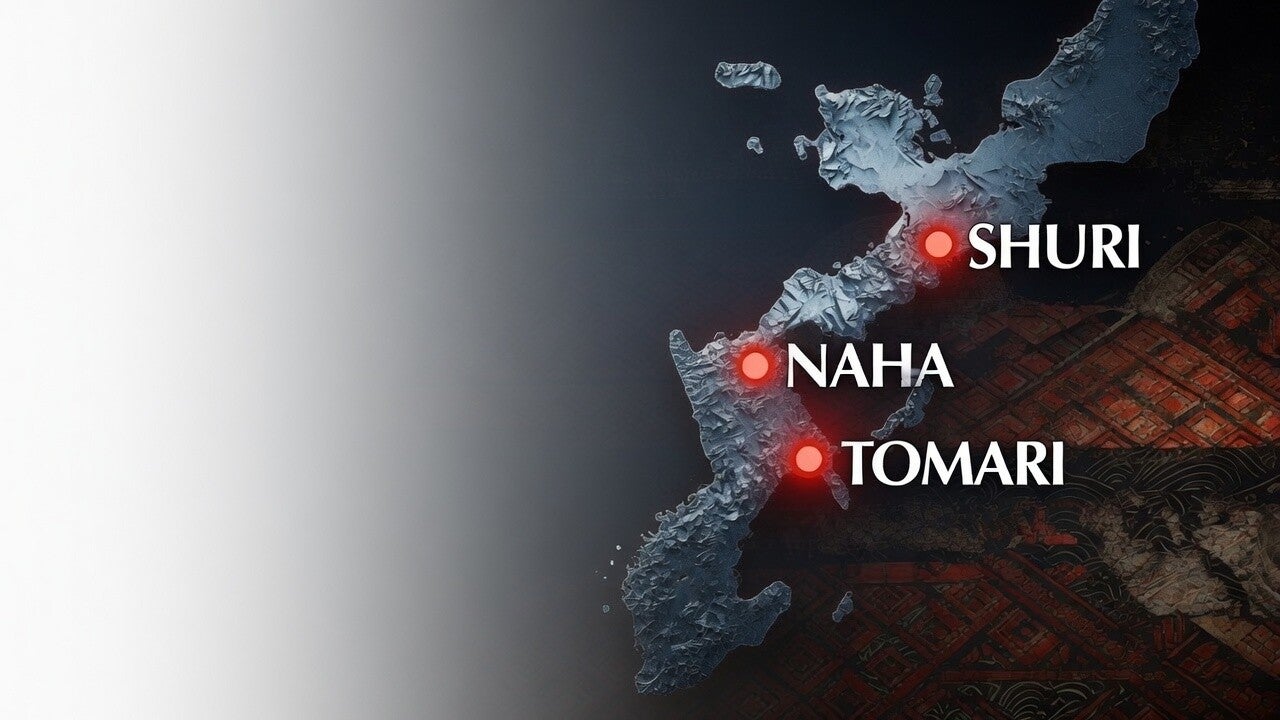

The Ryukyu Shorinji‑Ryu Karate Association was founded with the purpose of preserving the teachings and legacy of Hanshi Kenneth Balliet. Hanshi Balliet devoted his life to the study, refinement, and transmission of martial arts. Drawing from decades of training across multiple disciplines, he shaped Ryukyu Shorinji‑Ryu Karate‑Jutsu into a cohesive and effective system rooted in classical Okinawan principles.
Throughout his lifetime, Hanshi encouraged his students to understand technique not as rigid choreography, but as a living method adaptable to the individual. This philosophy—grounded in practicality, personal expression, and disciplined study—became the foundation upon which the system evolved.
From this mindset, a true method of self‑defense emerged: one that honors tradition while empowering each practitioner to develop skill, confidence, and personal mastery. The Association continues this mission today, ensuring that the teachings of Hanshi Balliet endure for future generations.
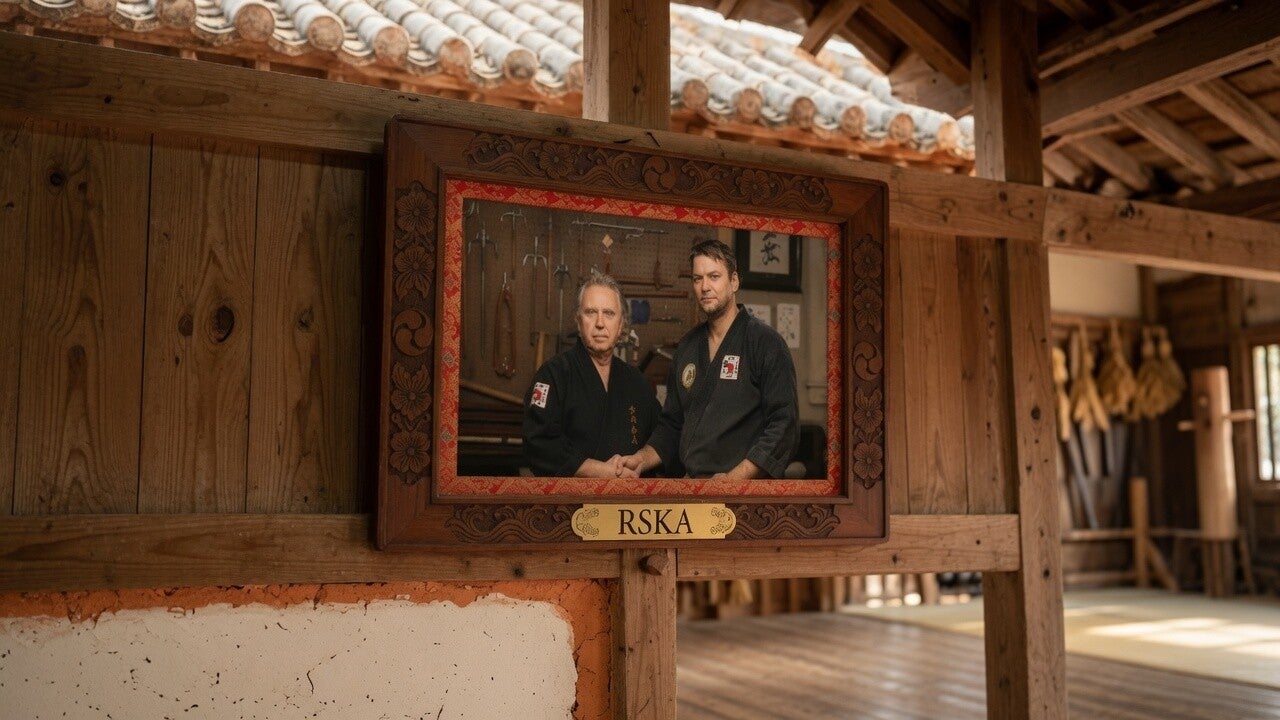

The Legacy of Chotoku Kyan in Ryukyu Shorinji-Ryu Karate Jutsu
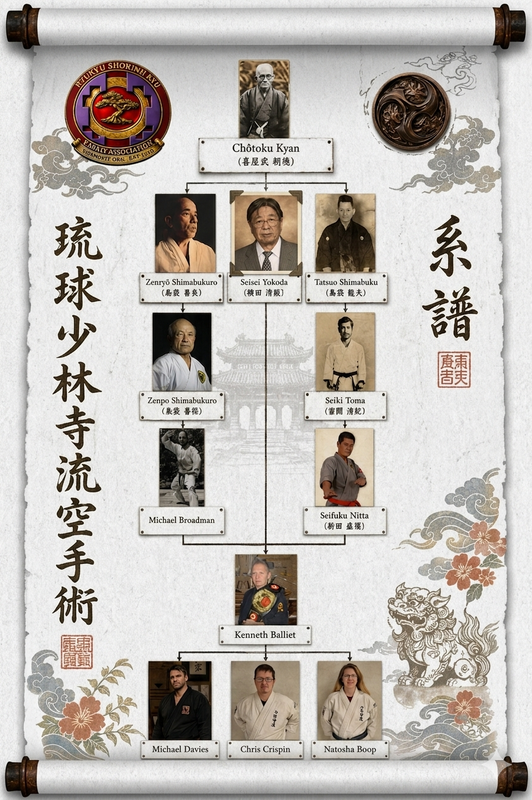
Chōtoku Kyan (1870–1945) stands as a central figure in the development of modern Okinawan karate and the primary source of this lineage. Known for synthesizing teachings from prominent masters such as Sokon Matsumura and Kosaku Matsumora, Kyan emphasized light, fast movement, precision, and practical self‑defense rooted in classical Shuri‑te. His approach became the foundation for multiple branches that would later influence Shorin‑based systems, including Shorinji‑Ryū Karate.
From Chōtoku Kyan, the lineage branches in several directions. One major line passes through Zenryo Shimabukuro, who formalized and transmitted Kyan’s teachings. Zenryo Shimabukuro’s son, Zenpo Shimabukuro, continued this transmission and brought the system beyond Okinawa. In the early 1960s, Zenpo Shimabukuro traveled to Philadelphia, where he taught Michael Broadman. Through this direct instruction, Broadman received authentic Shorin‑based kata, structured fundamentals, and the disciplined methodology characteristic of the Shimabukuro family line.
A second branch from Chōtoku Kyan continues through Seisei Yokoda, who preserved Kyan’s original principles of lightness, speed, efficiency, and adaptability in application. This line maintains a strong emphasis on natural movement and practical interpretation, reflecting the spirit of Kyan’s teachings.
Another parallel branch from Kyan extends through Tatsuo Shimabukuro to Seiki Toma and then to Seifuku Nitta, contributing additional perspectives within the broader Shorin tradition that intersect with the developing system.
Hanshi Kenneth Balliet’s Ryukyu Shorinji‑Ryū Karate‑Jutsu emerges at the convergence of these lines. From Michael Broadman, Hanshi Balliet inherited the structured curriculum, kata foundation, and disciplined progression rooted in the Zenryo–Zenpo Shimabukuro transmission. From Seisei Yokoda, Hanshi Balliet received the direct influence of Chōtoku Kyan’s principles—light, fast movement, precise technique, and adaptable application. Additional influence is reflected through the broader Shimabukuro–Toma–Nitta connection, reinforcing the system’s ties to Okinawan Shorin traditions.
The integration of these converging branches provided Hanshi Balliet with both formal structure and fluid expression, forming the technical and philosophical basis of Ryukyu Shorinji‑Ryū Karate‑Jutsu. This lineage continues through his student, Michael Davies, preserving the combined legacy of Kyan’s teachings as they evolved through these interconnected lines.